ServicesStorm Damage Repair
Storm Damage Repair in Mustang
After hail or high wind, we get on your roof, find what actually broke and photograph it. Then you get the scope and the price factors in writing before we touch anything. No add-ons sprung on you halfway through the job.
What storm damage repair covers
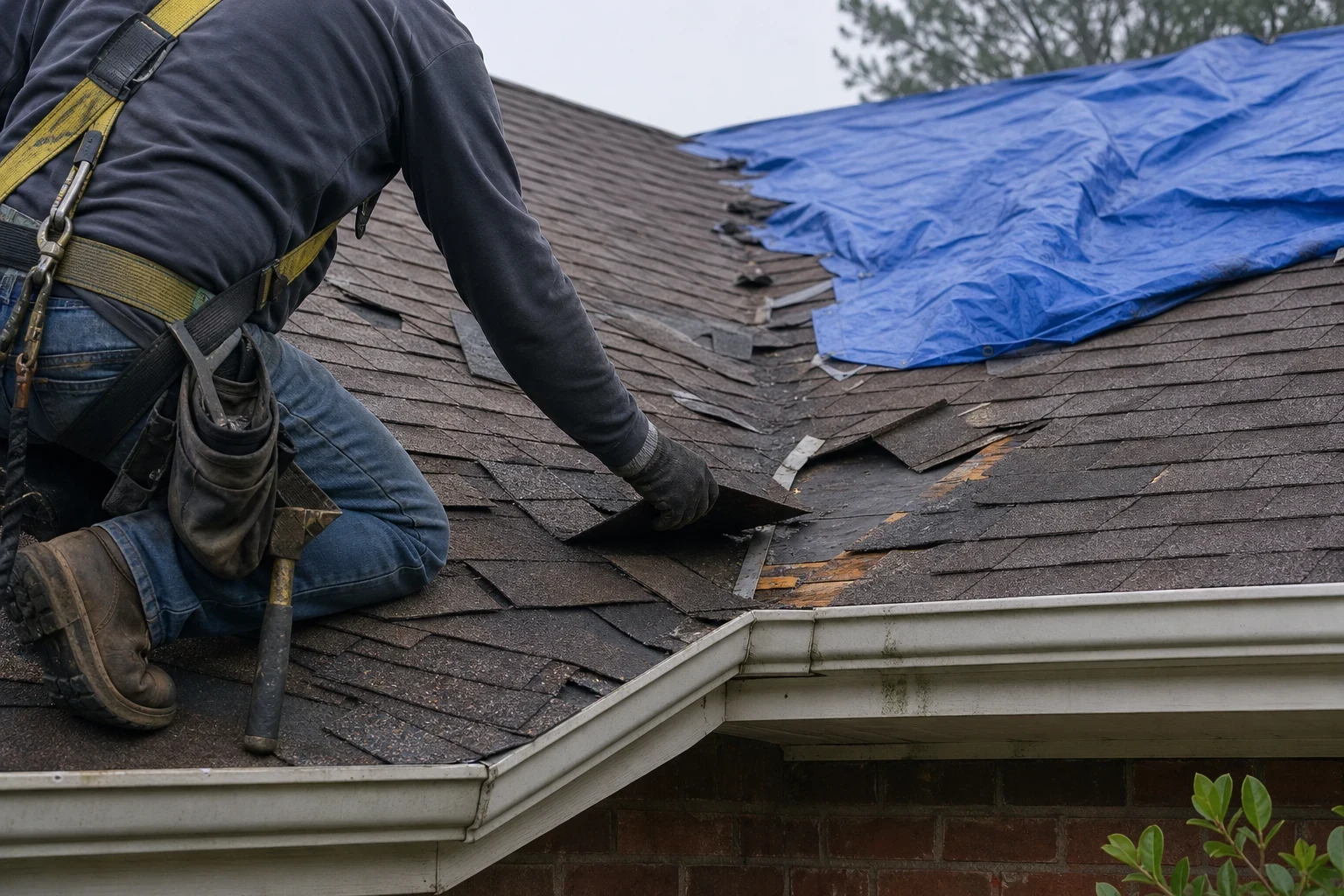
Spring storms in central Oklahoma bring hail and straight-line wind. Hail bruises shingles and knocks off the granules that protect them. Wind lifts tabs, breaks the seal strip and sometimes peels shingles off. A roof can look fine from the yard and still have damage that leaks a year later.
Storm damage repair means fixing what that storm did, and nothing it didn't. Sometimes that's a few shingles and a vent cap. Other times the hail hit every slope, and a roof replacement makes more sense than a string of patches. We say which way it goes and point to the photos that back it up.
Before work starts, you get a written scope. It lists what we'll replace, what we'll leave alone and what could change the price once we're up there. If something new turns up, we stop and talk to you first.
What the work includes
- Every slope, not just one
- Hail and wind don't stay on one face of the roof. We go over all of it: shingles, ridge caps, flashing, vents, skylights and the gutters.
- Photos of the damage
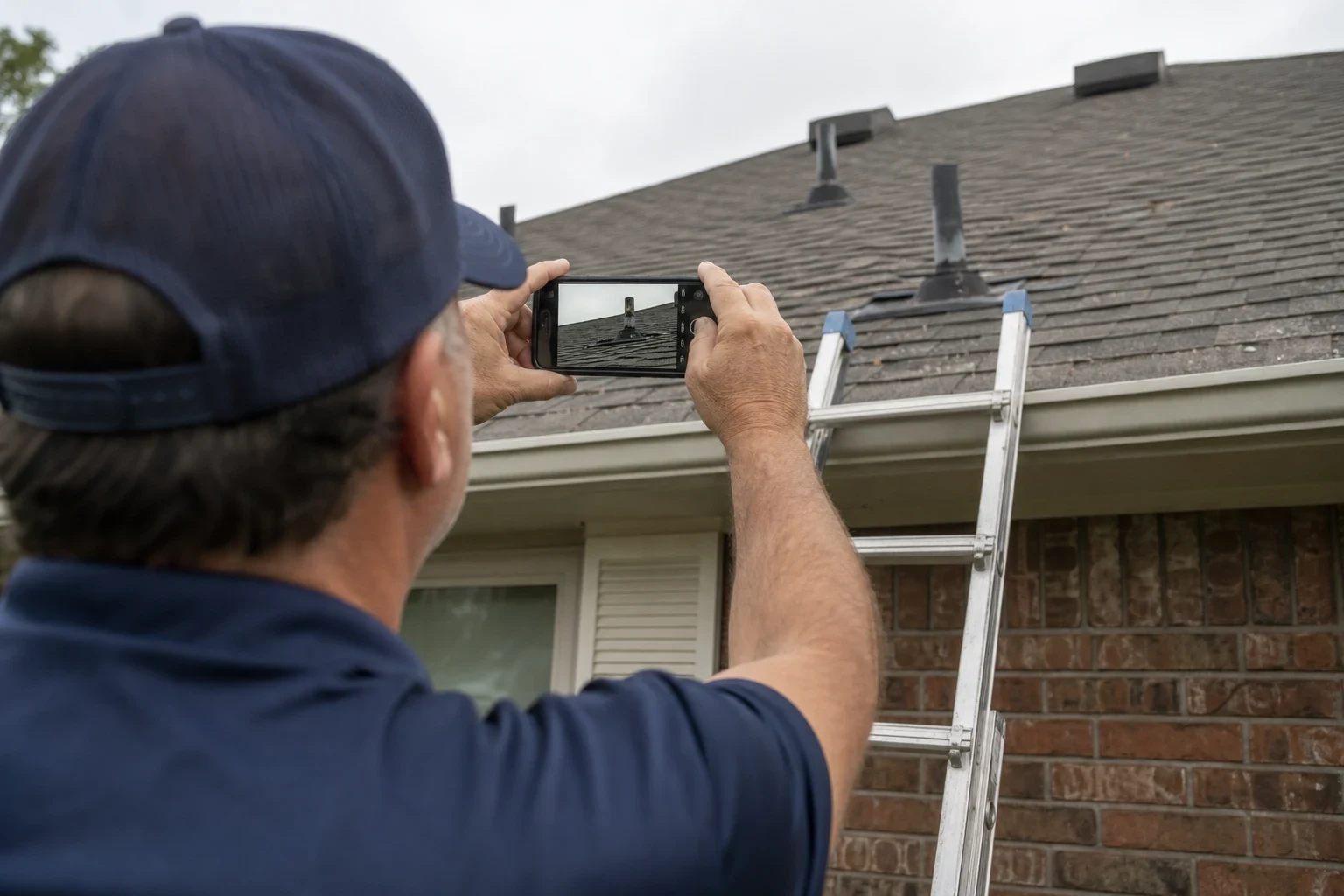
- We mark hail hits and photograph them with something for scale. You get the photos to keep, and you can hand them to your insurance company if you file.
- A written, line-by-line scope
- Each item is listed: shingles by the square, flashing, vents, drip edge, decking if needed. You see what's in the job and what isn't.
- Matching repairs
- We match shingle type and color as close as the market allows. If an exact match is no longer made, we tell you up front instead of after the patch is on.
- Soft metal and gutters
- Dented vents, flashing and gutters get checked too. Dents on soft metal are often the clearest proof of hail size, and bent gutters stop draining right. Bigger gutter jobs are covered on our Gutters page.
- Cleanup
- We tarp beds and shrubs, haul off old material and run a magnet over the yard and driveway for nails.
Signs a storm hurt your roof
Granules in the gutters
Gritty, sand-like grit piling up at the downspouts after hail is the shingle surface washing off. Once the asphalt underneath is exposed, the sun dries it out and it cracks years early.
Missing or creased shingles
Wind can bend a shingle up and let it fall back looking normal. That fold breaks the adhesive strip underneath, so the next strong gust can lift it right off.
Dents on vents and gutters
If metal on the roof or the gutters has round dents, the shingles took the same hits. Those are easier to spot from the ground.
New water stains inside
A stain on the ceiling or wet insulation in the attic after a storm points to an opening. Water can travel, so the leak may sit a few feet from the stain.
Neighbors getting new roofs
When roofing crews show up on your street after a hailstorm, your roof likely saw the same hail. It's worth a look even if nothing leaks yet.
What moves the price
Every storm job is different, so we don't quote off a phone call. Once we've been on the roof, the price factors go in writing. That's the price you agreed to, unless you approve a change.
How much is damaged
A handful of shingles on one slope costs far less than hits across the whole roof. Past a point, patching costs more over time than replacing.
Decking under the shingles
If wind let water in, the plywood can be soft or rotted. We can't see that until shingles come off, so the scope lists a per-sheet price ahead of time.
Pitch and number of stories
A steep pitch or a second story means harnesses, roof jacks and slower footing for the crew. That adds labor hours to the job.
Matching materials
Older or discontinued shingles can be hard to match. Sometimes a whole slope has to be redone to look right.
Metal parts
Replacing dented vents, flashing, drip edge or gutters adds to the total. Each one is a separate line so you can see it.
How a storm repair goes
- 1
You tell us what happened
On the phone we ask what you noticed and roughly when the storm came through. Then we pick a day that works for you.
- 2
Roof and attic check
We go over the roof, look in the attic if you're okay with that, and take photos as we go. Back on the ground, we show you each spot and explain it.
- 3
You get the scope in writing
The written scope lists each repair and what moves the price. If you're filing a claim, we explain how the process usually runs and can meet the adjuster on the roof. We don't act as the adjuster, and the claim decision is between you and your insurer.
- 4
We do the repair
Most repairs take a day or less. Bigger jobs we schedule around the weather and tell you the plan the day before.
- 5
Final walk and cleanup
We sweep for nails, haul debris and show you the finished work. If anything on the scope changed, it's on paper and you approved it first.
Storm damage questions
Do I have to file an insurance claim?
No. That's your choice. Some homeowners pay for a small repair themselves to keep a claim off their record. We give you the photos and written scope either way, so you can decide with real numbers.
Can you meet my insurance adjuster?
Yes, we can be on the roof when the adjuster comes and point out what we found. We don't negotiate your claim or tell you what it's worth. That stays between you and your insurer.
How soon after a storm should I have it checked?
Soon is better. Most policies set a time limit for filing, and small openings let water in with every rain. A cracked shingle that waits a season can turn into wet decking.
What if you find more damage once you start?
We stop and show you. Nothing gets added to the bill until you've seen it and said yes. Likely extras, like decking, are already priced per unit in your written scope.
Should I climb up and look for damage myself?
We'd rather you didn't. Wet or hail-bruised shingles are slick, and walking on them can make damage worse. From the ground, check the gutters for granules, look for dented vents and shine a flashlight around the attic. Tell us what you saw and we'll take it from there.
Do you work outside Mustang?
Yes. Storm repairs take us to Yukon, Tuttle, El Reno, Newcastle and the communities in between. If you're not sure we come out your way, just ask when you call.
Get the damage on paper before anyone starts
Give us the date of the storm and anything you've spotted, like granules, a stain or a dented vent. We'll pick a day to come look, photograph the damage and put what your roof needs in writing.